Caligula director Tinto Brass dead aged 93
The Italian filmmaker, whose career spanned more than five decades, became internationally recognised for sexually provocative historical dramas and a bitter dispute over changes made to his most notorious production.
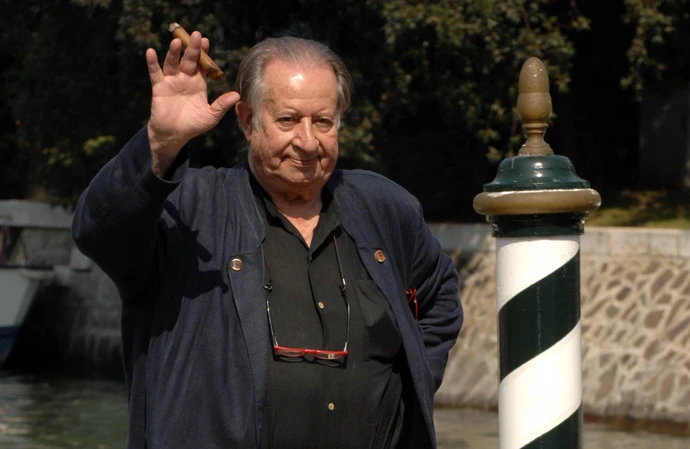
Tinto Brass, the Italian film director whose sexually explicit historical dramas Caligula and Salon Kitty provoked controversy and repeated clashes with censors, has died aged 93.
The filmmaker’s death was announced by his family on Wednesday (04.11.26), according to the Italian news agency Ansa. Tinto, who began his career in experimental cinema before becoming internationally associated with erotic films, spent more than five decades working in the industry.
His career included collaborations with some of European cinema’s best-known actors and a prolonged dispute over the final version of Caligula, which was released without his approval.
Tinto’s family confirmed his death to Ansa, although no further details about the circumstances were provided in the announcement.
He was raised in a Venetian family of artists and initially studied law before pursuing a career in cinema during the late 1950s.
The filmmaker moved to Paris, where he worked as an archivist at the Cinémathèque Française, an institution devoted to preserving and screening films.
During his time there, he met Italian neorealist director Roberto Rossellini and subsequently worked as an assistant on Roberto’s 1959 war drama General della Rovere.
Tinto made his directorial debut in 1963 with In Capo al Mondo, later renamed Chi Lavora è Perduto, a film about an unemployed young man struggling with the expectations of society.
Set in Venice, the film received an enthusiastic response at the Venice Film Festival but encountered difficulties with Italian censors.
The dispute marked the beginning of a series of confrontations with censorship authorities that would continue throughout his career.
During the late 1960s and early 1970s, Tinto spent considerable time in London, directing several English-language productions.
Among them was the 1967 erotic thriller Deadly Sweet, starring French actor Jean-Louis Trintignant and Swedish actress Ewa Aulin.
The film follows a young man who discovers a business associate has been murdered and decides to protect a woman found at the crime scene rather than immediately contacting the police.
His attempt to uncover the killer draws him into London's criminal underworld.
Deadly Sweet screened out of competition at the Venice International Film Festival in 1967, while a restored version was presented at the festival earlier this year in tribute to Tinto.
He subsequently directed Attraction in 1969 and Dropout in 1970, continuing his work in experimental and sexually provocative cinema.
Tinto achieved wider international recognition with the 1976 erotic war drama Salon Kitty, starring Helmut Berger.
Set in Nazi-era Berlin, the film depicts a luxury brothel used by German intelligence officers to gather information about influential clients.
However, his most widely recognised and disputed production was Caligula, the historical drama starring Malcolm McDowell, Helen Mirren, John Gielgud and Peter O'Toole.
The film, centred on the Roman emperor Caligula, became notorious for its explicit sexual content and the bitter disagreements surrounding its production and release.
The project was financed by Bob Guccione, the founder of Penthouse magazine, and involved a screenplay by American writer Gore Vidal.
Disagreements between Tinto, Gore and Bob escalated during production, eventually resulting in the director losing control over the finished film.
Bob subsequently added explicit material filmed separately after the principal cast had completed their work.
Tinto and Gore objected to the alterations and pursued legal action to have their names removed from the production.
The version ultimately released differed substantially from the film Tinto had intended to make.
The controversy surrounding Caligula continued decades after its original production, with the film receiving renewed attention following the release of Caligula: The Ultimate Cut in 2024.
The reconstruction, overseen by art historian Thomas Negovan, used previously unseen footage from the original production to create a substantially different version of the historical drama.
Malcolm, who played the Roman emperor, is also known for his starring role in Stanley Kubrick’s A Clockwork Orange, while Helen later won an Academy Award for her portrayal of Elizabeth II in The Queen.
The renewed interest in Caligula followed years of debate over the film’s troubled production and the changes made without Tinto’s consent.
After the controversy, Tinto continued directing films exploring sexuality and relationships.
In 1983, he released The Key, an adaptation of a novel by Japanese writer Jun'ichirō Tanizaki, starring Italian actor Stefania Sandrelli.
The film marked a further move towards stories examining sexual desire and personal liberation, themes that became increasingly prominent in his later work.
His subsequent productions included Black Angel in 2002 and Fallo in 2003, both of which continued his exploration of sexuality through female characters.
Tinto is survived by his wife, Caterina Varzi, and his two children, Bonifacio Brass and Beatrice Brass.