Forensic expert believes Jeffrey Epstein 'was likely strangled to death'
A forensic expert has revealed his believes around the death of Jeffrey Epstein, which was ruled as a suicide.
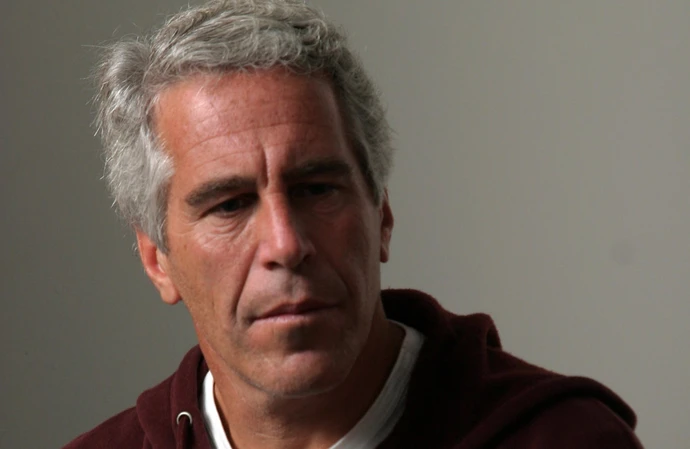
A forensic expert believes Jeffrey Epstein died in a homicide.
Professor Michael Freeman, who has worked as a cause-of-death expert for police custody cases in the US, has given his opinion seven years after convicted sex offender Epstein was found dead in prison.
His death was officially ruled a suicide, but Freeman has told BBC Newsnight that he believes Epstein was strangled from behind.
He claimed there are signs indicating an assault, including a deep haemorrhage to his left shoulder, and injuries which appear to be consistent with a strike to the face.
Freeman, whose independent research has not been peer reviewed, said what seems to be fingernail marks around a ligature mark on his neck "would be consistent with strangulation, particularly from behind. And the attempt by the victim to try to remove the ligature from the neck".
He claimed: "The injuries and the way the body was found don't match up.
"There's only one remaining explanation then, and that is that the death was as a result of a homicide."
Epstein was found dead on August 10, 2019, while awaiting trial on sex trafficking charges.
Dr Barbara Sampson, who was the chief medical examiner for Epstein's autopsy, ruled his death was a suicide.
She previously said: "I stand firmly behind our determination of the cause and manner of death for Mr. Epstein."
At the time of Epstein's autopsy, the medical examiner told the Department of Justice (DoJ) Office of the Inspector General that Epstein's injuries were more indicative of a suicide by hanging rather than homicide.
Freeman argued that he would have expected a photograph before the body was taken down.
A DoJ investigation into Epstein's time in prison previously claimed that the guard who found his body called for a colleague to help, and they lowered his body to the floor before trying to resuscitate him.
The report also noted his death came a month after he was briefly placed on suicide watch.
Asked if his belief could be a conspiracy theory, Freeman argued: "I have the luxury of being able to say, don't take my word for it, let everybody look at it.
"If you think I'm still a conspiracy theorist because I'm looking at something that looks like a strangulation and say, I think it is a strangulation and I don't think it could be a hanging, show me where I got it wrong.
"I'm wide open to that. I'm an academic. I'm quite happy to hear people's theories on things that are informed."