Microsoft president Brad Smith says milk is more regulated than AI
Microsoft president Brad Smith has called for urgent global rules governing artificial intelligence, arguing that everyday products such as washing machines and milk are subject to stronger safety requirements than increasingly powerful AI systems.
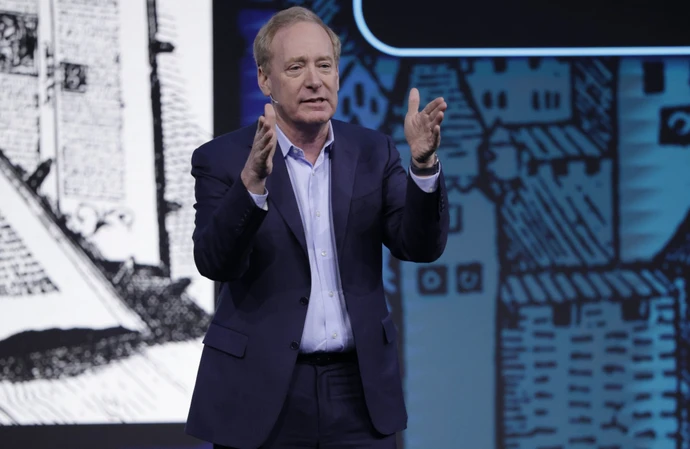
Milk and washing machines are currently subject to more safety regulation than artificial intelligence, according to Microsoft's president, Brad Smith, who has called for urgent global rules governing the technology.
Speaking to the BBC's Big Boss Interview podcast, Smith said AI should be treated as both a "tool and a weapon" and argued that governments could adapt existing safety systems to deal with its risks.
He said: "Right now, your washing machine is subject to more safety rules than AI. Every carton of milk that you see in the grocery store is subject to safety rules and inspection."
Smith called for AI companies to have "emergency brakes" that could pause or slow systems if they behaved unexpectedly. He also wants firms to be legally required to produce incident reports and inform people if they are harmed by a rogue AI agent.
He said independent government-appointed evaluators should also be able to assess some AI products before they are released.
Smith said: "We know how to do this for other products. We should build on that knowledge and think about how to apply it to AI."
His position puts him at odds with US President Donald Trump, who has repeatedly argued that the industry should largely regulate itself to ensure American companies maintain an advantage over China.
Trump has said "whoever wins AI, wins", while Smith believes the UK could play a leading role in developing international safety standards.
He praised the UK's AI Security Institute, established by the previous government, saying it has strong technical expertise.
He said: "In the world of technology, in the tech sector, most people that I know would say, if you ask them, name the country that is the leader in having this technical capability, they would say, it's very simple. It's the United Kingdom."
Smith also backed a recent agreement signed by major technology companies at the White House, under which firms committed to using independent auditors to assess AI systems.
Microsoft is "happy to sign it", he said, but added: "It's a good step, it's a necessary step... But I don't think it's sufficient any longer."
Smith argued that voluntary measures could fail because responsible companies would follow them while less responsible firms might not.
He said: "When you look at AI agents that have escaped human control, when you look at models that are so powerful that they're putting the world's cybersecurity at risk, the moment has arrived."
He called for countries to work together on rules before increasingly autonomous AI systems become harder to control.