Gillian Anderson has changed her 'self-judgemental' outlook on ageing
Gillian Anderson opened up to Harper’s Bazaar magazine about how she’s adjusted her outlook on ageing over the past few years, and stopped being so “self-judgmental and negative” about her advancing years.
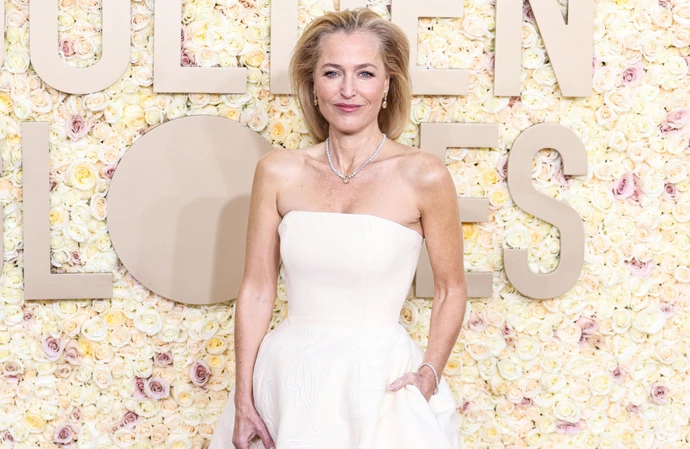
Gillian Anderson “wasted a lot of hours” worrying about getting older.
The 57-year-old actress opened up to Harper’s Bazaar magazine about how she’s adjusted her outlook on ageing over the past few years, and stopped being so “self-judgmental and negative” about her advancing years.
She said: “I remember in my 20s and 30s feeling worried all the time, and it felt like I had a running intensity, almost like a running agitation in my head.
“Like an argument, constant conversations going on in my head the whole time, and just a lot of noise, and also self-judgment. I spent many, many years being very self-judgmental and negative in my head about myself, and wasting a lot of hours and a lot of time.”
But now, the negative feelings “don’t exist” anymore.
She explained: “It’s taken some work, as it's not just age that has put it in the rearview mirror, I’ve definitely worked at it.
“Nothing matters so much anymore. I don't feel like I hold on to things so tightly. It's much easier to just shrug things off and let things be.”
Gillian is gearing up to release her next book, titled More, in September - a follow from her first book Want.
Speaking about the new tome, she explained: “It's a follow-on from the first book, Want, and so it's similar in what the original ask was: asking women to submit their anonymous fantasies. It’s the same ask, different women, and a much broader scope of submissions, more international. I'm very pleased about that.
“They do feel that there’s something bolder about them, in a way. It almost felt like with the first submissions, there was a little bit of nervousness around, you know, ‘Would it really be anonymous? Will I get away with this? Am I going to be found out? I've never said this out loud before.’
“I think because of the success of the first book and the events that have taken place after the fact, it's kind of built up a community.
“It was talked about so much, there were so many, particularly women journalists, who really kind of took it upon themselves to champion it, and you know it became a real talking point.”
Gillian added that the letters she received for the book this time around felt “more confident” and “bolder”.
She said: “With the first one, what I understood women really appreciated was if they submitted, being able to tell other people about this thing in their head that maybe they had felt quite a lot of shame about, or had read something that they felt was either similar to their own fantasy, or read something about another person who submitted that felt like they identified with and therefore felt seen in a way.
“That they weren't the only one who had these thoughts or feelings, or beliefs, or fears. It really is a coming together in a way, and it has a tendency to bring women of all ages together, not just in conversation but in identification, and a sense of agency.”