00 AND 7: James Bond Gets His Balls Back - Ditching Woke for Savile Row Swagger, as Proper Gentlemen Never Go Out of Style
Why Robert Pattinson might just be the man to save 007 from his own character assassination - after working his magic at Hogwarts, sinking his teeth into a bloody role that sucked, and going bat sh*t in Gotham, he may be shaken up - but nothing can stir him up inside now that he has an official licence to thrill as 007!

Yes, it's true, Robert Pattinson has officially been cast as the next James Bond.
Days later, our brains are still buffering.
The brooding, pale-faced, emotionally unavailable, sparkles-in-the-sun vampire - who spent five films looking like he desperately needed an iron transfusion - is about to become Britain’s most notorious secret agent.
Stepping into James Bond's bespoke tuxedo, R Patz has effectively completed every boy's ultimate childhood checklist. He’s already waved a wand at Hogwarts as Cedric Diggory, ruled the night as a vampire, patrolled Gotham as Batman, and is now officially licensed to thrill for His Majesty’s Secret Service.
While half the nation was convinced Callum Turner had the coveted licence to kill, turns out those rumours were nothing more than a red herring planted to send us all on a wild goose chase. Well played, Amazon MGM Studios (who took over creative control of the franchise from Eon Productions in 2025), well played.

Robert Pattinson sinks his teeth into the role of a life time playing vampire Edward Cullen in Twilight / Credit: Avalon
Naturally, the announcement has raised more than a few eyebrows since dropping earlier this week, particularly among those who still associate Pattinson with his rookie, sorry, Twilight days (2008–2012), when he took on the role of Edward Cullen - a dangerously codependent, century-old bloodsucker who developed an unhealthy obsession with a teenage girl.
"True love" apparently.
Still, while Twilight was undeniably a gag-inducing cinematic experience, at least it gave us lines to pick apart:
"Your scent is like a drug to me, like my own personal brand of heroin."
"And so the lion fell in love with the lamb."
"I have the skin of a killer."
Then again, given that it was Robert Pattinson delivering them, we all happily missed the red flags and reframed it as unyielding passion. He knew how to make the girls swoon.
Still, despite the cheesy dialogue, I refuse to blame Robert Pattinson for Edward Cullen’s emotional constipation. There is only so much you can do with a character whose entire personality revolves around staring intensely at a girl while resisting the urge to eat her like a snack.
No amount of method acting can rescue a Temu version of Bram Stoker’s Dracula. Nevertheless, Twilight became a cult juggernaut - even though it sucked! (pun very much intended).
To be fair to the man, Pattinson has spent the better part of two decades running from his twinkling shadow. He even went as far as becoming DC’s new Caped Crusader in Matt Reeves’ The Batman (2022). Rob was so desperate to shed his vampire image that he eventually turned himself into a Bat. The irony doesn’t go amiss - just call it God’s good humour.

Flying off the handle in The Batman / Credit: Warner Bros
From Hogwarts School of Witchcraft and Wizardry to His Majesty’s Secret Service
Here is why I have faith in Robert Pattinson.
Before he became a vampire, before he put on the cowl in Gotham, and before arthouse directors discovered his gift for playing psychologically tormented men in films like The Lighthouse (2019) and Tenet (2020), he was Cedric Diggory.
As a Harry Potter geek, that matters the most.
Any die-hard Harry Potter fan remembers the handsome Hufflepuff champion who graced our screens in Harry Potter and the Goblet of Fire (2005), competing alongside Harry during the Triwizard Tournament. He radiated that sort of effortless, old-world charm that made an entire generation of teenage girls collectively weak at the knees. A gentleman in the traditional sense.

Casting his magic over Hogwarts as Cedric Diggory in Harry Potter and the Goblet of Fire / Credit: Avalon
And then J.K. Rowling did him dirty by killing him off. The only thing separating J.K. Rowling from a psychopath is that she commits her murders on paper. Her killing spree at the end of the series was ruthless, the bloodshed was savage, and an entire generation- myself included - was traumatised by Cedric's death. Some of us still haven’t recovered.
The point is, Cedric Diggory possessed the exact qualities fundamental to James Bond: quintessential British charm, understated confidence, impeccable manners, calm composure, and a commanding screen presence. Cedric, of course, was far more wholesome than Bond - one was an honourable schoolboy who played by the rules, while the other is a government-sanctioned assassin with a flexible moral compass - but the raw ingredients were all there.
If it walks like a duck and talks like a duck... put it in a velvet tuxedo.
The name's Bond, James Bond: Joining the Iconic 007 Line-up
At 40 years old, Pattinson enters the franchise not as an unknown gamble, but as an established heavyweight joining cinema's most exclusive fraternity. He officially becomes the seventh actor to carry the main franchise mantle, stepping into a legendary line-up.

Timothy Dalton as James Bond in The Living Daylights / Credit: Avalon
Sean Connery (1962 - 1967, 1971): The rugged Scottish blueprint who defined effortless alpha swagger across six Eon classics - Dr. No (1962), From Russia with Love (1963), Goldfinger (1964), Thunderball (1965), You Only Live Twice (1967), and Diamonds Are Forever (1971) - plus his unofficial return in Never Say Never Again (1983).
George Lazenby (1969): The one-film wonder who brought unexpected vulnerability and a ruffled dress shirt to On Her Majesty’s Secret Service (1969).
Roger Moore (1973 - 1985): The king of the raised eyebrow, safari suits, and camp sophistication across seven outings: Live and Let Die (1973), The Man with the Golden Gun (1974), The Spy Who Loved Me (1977), Moonraker (1979), For Your Eyes Only (1981), Octopussy (1983), and A View to a Kill (1985).
Timothy Dalton (1987 - 1989): The gritty, cold-blooded realist in The Living Daylights (1987) and Licence to Kill (1989) who was arguably decades ahead of his time.
Pierce Brosnan (1995 - 2002): The suave 90s heartthrob who balanced lethal precision with effortless glamour across GoldenEye (1995), Tomorrow Never Dies (1997), The World Is Not Enough (1999), and Die Another Day (2002).
Daniel Craig (2006 - 2021): The blunt-instrument bruiser - with a resting b**** face - who dragged Bond into the 21st century - and eventually onto the therapy couch - across Casino Royale (2006), Quantum of Solace (2008), Skyfall (2012), Spectre (2015), and No Time to Die (2021).

Daniel Craig as James Bond in Casino Royale / Credit: Avalon
Even better, Pattinson isn't going into battle alone. With visionary Canadian filmmaker Denis Villeneuve (Arrival, Blade Runner 2049, Dune) directing the next instalment and Peaky Blinders creator Steven Knight penning the screenplay, there is serious reason for optimism.
If anyone can bring psychological depth, darkness, and cinematic sophistication back to 007, this creative team has a licence to thrill.
Woke is dead! And long overdue for a cremation. Pour a martini - shaken, not stirred, in controversy - because James Bond has got his swagger back
I cannot wait to see James Bond return to his Ian Fleming roots and stay true to character - at least, I hope that’s the direction the film is heading in.
Somewhere between political correctness, contemporary moral hand-wringing, and Hollywood’s obsession with dissecting established characters to make them "woke", the industry lost sight of what made Bond so compelling in the first place.
When Fleming introduced Bond in his 1953 novel Casino Royale, 007 was never intended to be a sensitive, soul-searching role model. He was written to be a cold, calculating, and cutthroat secret agent operating in high-stakes environments where survival depended on making ruthless decisions without sentiment getting in the way. Equally, he was charming, arrogant, sophisticated, intelligent, sexually confident, and an unapologetic ladies' man.
Being a walking contradiction is his entire allure - a gentleman with a killer instinct. Someone who can seduce a woman over vintage champagne then put a bullet in a man's head before the bubbles fade without losing a wink of sleep.
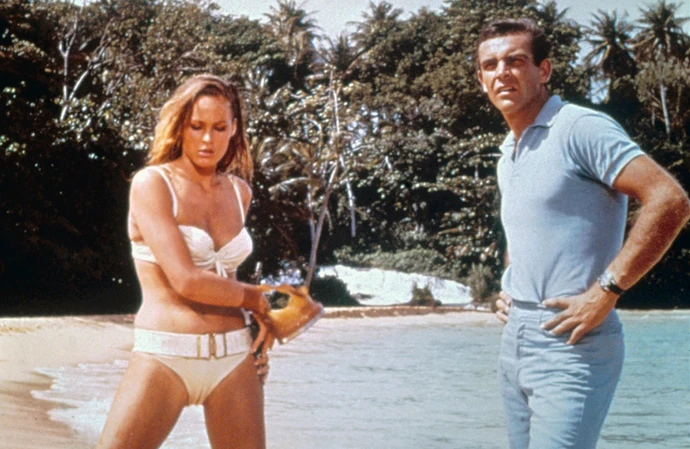
Sean Connery as James Bond in Dr No / Credit: Avalon
Which brings us to No Time to Die (2021) - the final chapter that marked the end of Daniel Craig’s reign. Frankly, I thought it was an abomination. By the end of it, it made me want to die.
For a man who spent decades surviving torture, exploding lairs, assassination attempts, international terrorism, and lethal femmes fatales, Bond’s greatest adversary turned out to be his own heavy-handed melodrama. The once-dangerous, strategic, and emotionally detached secret agent had become so weighed down by domestic baggage that he was barely recognisable - a weeping shell of the man he once was. And then they blew him up.
As the filmmakers would have us believe, he heroically died for the people he loved. How very noble indeed...
Personally, I prefer to think of it as a final act of defiance. For a man who couldn’t bear another minute of his own existential crisis, death by missile strike looked like the most appealing exit strategy left - a final act of dignity framed as sacrifice. After all, there is a Japanese term for this: seppuku, the historical ritual suicide practised voluntarily by samurai to die with honour rather than live in defeat.
I have no objection to character development, provided you don't destroy a character's essence by dismantling the very traits that made them compelling in the first place. Cinema must keep with the times, yes, but the bid for inclusivity cannot overshadow the story by rewriting legacy characters to push an agenda.
At one point, the casting conversation seemed less concerned with who could convincingly embody Fleming’s iconic spy and more obsessed with which demographic James Bond had to represent. Being a fictional character was no longer enough; he had to become a symbol of social progress. God forbid a fictional character simply remain a fictional character.
Now, before anyone starts sharpening their pitchforks, let me be crystal clear... I have nothing against women playing powerhouse leading roles, or diverse actors fronting major franchises. What I question is the creative laziness of taking established characters and reinventing their core identities in the name of inclusivity - particularly when the justification appears to be that the original character isn’t "representative" enough.
Representative of whom, exactly?
James Bond was never supposed to represent everyone; he was supposed to represent James Bond.

Sean Connery as James Bond in Goldfinger / Credit: DPA
That’s the whole point of creating a distinct character in the first place.
If every fictional creation must reflect every demographic, every identity, and every contemporary social expectation, at what point does a character stop being an individual and start becoming a diversity checklist?
Male? Tick.
Female? Tick.
Every ethnicity? Tick.
Neurotypical? Tick.
Neurodivergent? Tick.
Disabled? Tick.
Mental illness? Tick.
Heterosexual? Tick.
LGBTQIA+? Tick.
They may end up as the world’s most inclusive fictional creation, yet they are completely devoid of personality.
A Character Assassination Orchestrated by Hollywood's Identity Crisis
This is where certain manifestations of woke culture are taking the royal p***. Somewhere along the way, the perfectly reasonable desire for greater representation became entangled with the rather unreasonable expectation that every existing icon must be up for ideological renovation.
It's out with the old and in with the politically acceptable.
Of course women and minority actors deserve original, compelling characters of their own - not simply the hand-me-down opportunity to inherit somebody else's.
But why on earth should female empowerment depend on transforming an established male character into a woman? Surely it is infinitely more empowering for a woman to carve out her own iconic identity than to borrow a man’s.
Even long-time Bond producer Barbara Broccoli famously rejected the idea of a female 007, arguing that women deserve original stories rather than female versions of male roles.

Sean Connery as James Bond in Goldfinger / Credit: Avalon
Nobody wants a Jane Bond or James Blonde. Sorry, not sorry!
As for the debate surrounding an ethnic Bond, there is an important distinction worth making. Race doesn’t determine personality, and plenty of phenomenal actors of colour could effortlessly embody Bond’s natural charm and sophisticated demeanour.
What I object to is the notion that altering a character’s identity should be treated as a moral achievement in itself. Casting should serve the character and the story - not function as a self-congratulatory PR trophy for studio executives.
Representation without substance isn’t progress; it’s window dressing. Hollywood has become so obsessed with appearing progressive that it has forgotten how to be creative.
Slacktivism: Acting Woke is a Performance in Itself
I have nothing against genuine social awareness when the intention is to challenge injustice, confront prejudice, and facilitate meaningful change.
War, oppression, systemic discrimination, marginalisation, and the abuse of power are all urgent realities that demand serious reckoning. Dismantling harmful stereotypes, amplifying underrepresented voices so they can tell their own stories, and holding institutions to account - that is what genuine social progress looks like.
Getting furious because a fictional spy created in 1953 doesn't conform to your moral checklist in 2026? That is something else entirely. There are women in Afghanistan fighting for basic human freedoms right now, and yet half the internet is losing sleep over whether James Bond should be renamed Jane.
The world has collectively lost the plot (pun very much intended).
We need to draw a sharp line between genuine social consciousness and performative wokeness. Too many people seem far more invested in looking morally superior than doing anything that actually improves society.
Directing moral outrage at fictional characters is remarkably convenient: you can sit comfortably behind a laptop screen, announce James Bond is "problematic", demand that a studio rewrite him, and then pat yourself on the back for advancing humanity. Somewhere, an imaginary secret agent has been held accountable for his imaginary crimes. The world is saved.
From a psychological perspective, it is fascinating. There is a vast gulf between genuine moral conviction and the cheap dopamine hit that comes from public righteousness. Outrage becomes less about the issue itself and more about the curated identity it allows someone to project.
Being offended becomes proof of enlightenment, condemning becomes proof of compassion, and demanding superficial change becomes a substitute for creating real-world impact. It is slacktivism dressed up as activism - a performance of virtue requiring zero personal reflection.
And therein lies the ultimate irony. Genuine social awareness requires questioning your own assumptions, examining your own biases, and confronting uncomfortable truths about yourself. It demands reflection, not just projection.
Yet the loudest demands for moral perfection rarely leave room for self-awareness. It is far easier to pick apart James Bond’s flaws than to examine the contradictions in your own behaviour - after all, a fictional assassin isn't going to call out your hypocrisy.
Demanding that fiction be universally inclusive, morally spotless, and representative of everyone is a fool's errand. A character is, by definition, an individual - defined by a specific history, worldview, and set of flaws that separate them from the crowd.
There is a bizarre contradiction in celebrating individuality while simultaneously insisting that fictional characters be sanded down to satisfy a collective standard of acceptability. The harder you try to make a character palatable to everyone, the faster you strip away everything that made them compelling to watch in the first place.
Not every film needs to be a sociology lecture. Not every character needs to be a vehicle for activism. Sometimes a story is simply a story, a villain is simply a villain, and James Bond is simply a cold-blooded bastard in a beautifully tailored suit. Why is that so hard to accept?
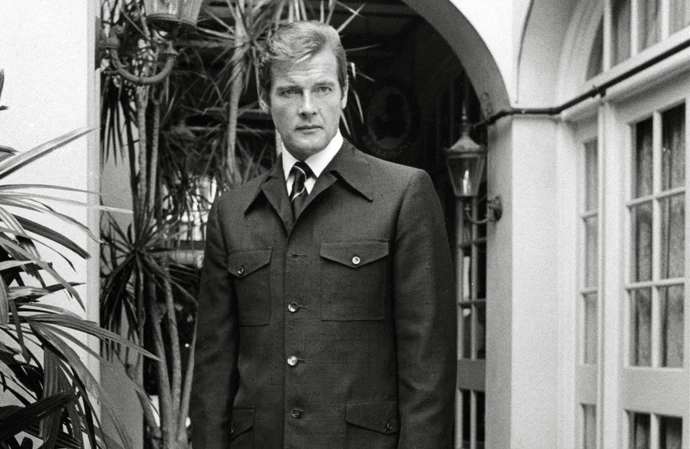
Roger Moore as James Bond in Lice and Let Die / Credit: Avalon
Let bygones be bygones: You cannot rewrite the past to suit the present
There is one final dimension to this debate that feels particularly dangerous. Our growing habit of judging historical works through the moral lens of the present, and demanding that anything uncomfortable be airbrushed out of existence.
The past is not supposed to mirror the present - that is precisely what makes it the past. History allows us to measure how societies have evolved, how attitudes have shifted, and how cultural norms have been challenged. You cannot appreciate how far you have travelled if you bulldoze the road behind you.
While fiction isn’t a history textbook, literature and cinema are vital time capsules of the eras that produced them. Ian Fleming conceived James Bond in the aftermath of the Second World War, against the backdrop of Cold War paranoia, British imperial decline, and a very specific post-war brand of masculinity. Bond’s attitudes, habits, and relationships are direct products of that world. You don't have to endorse every trait he displays to understand the historical context that shaped him.
Because if we rewrite every prickly character, sanitise every uncomfortable narrative, and erase every attitude that clashes with modern sensibilities, we aren't actually challenging the past - we are just pretending it never happened. Worse still, we risk creating a sterile, beige cultural landscape where art is too terrified to provoke, challenge, or entertain.

Robert Pattinson at Harry Potter Premiere / Credit: Avalon
With Robert Pattinson stepping into the tuxedo under Denis Villeneuve and Steven Knight’s watch, here’s hoping 007 finally leaves the therapy couch behind, orders a dry martini, and reminds Hollywood why we fell for the dashing rogue in the first place.
Consider this chapter officially closed - or technically rehashed, since going back to Ian Fleming’s original blueprint is the ultimate reboot.
Either way, Hollywood's identity crisis is officially over!
As Bond himself said in Casino Royale: "The b**** is dead."