
Tiger King court ruling flips footage copyright fight as ‘fair use’ wins in landmark US case
A US appeals court has shifted its stance in a closely watched legal battle involving the Tiger King docuseries, reinforcing protections for documentary filmmakers using unlicensed archival footage under certain conditions.
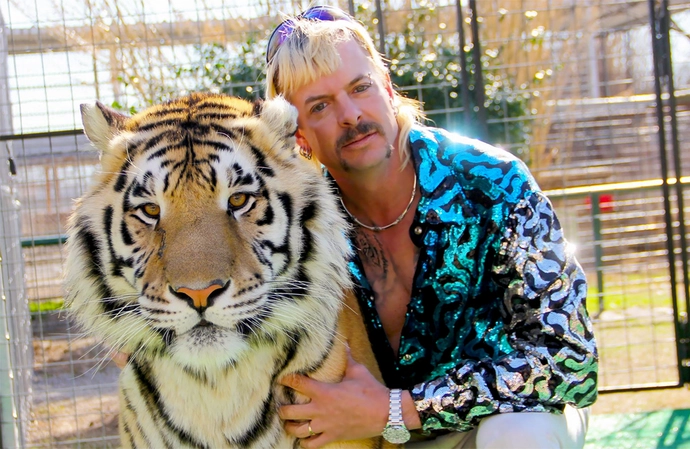
Netflix has been backed in a major legal battle over funeral footage used in the hit 2020 docuseries Tiger King.
The streamer’s hit show is at the centre of a significant new US copyright ruling, after an appellate court reversed its earlier decision and backed filmmakers’ use of unlicensed footage as “fair use”.
Heard by a three-judge panel of the 10th Circuit Court of Appeals, the case centred on a 66-second clip used in the Netflix series, which became a global cultural phenomenon during the Covid pandemic and remains one of the platform’s most widely discussed documentaries.
The court upheld a lower ruling dismissing a lawsuit brought by videographer Tim Sepi, who claimed his funeral footage had been used without permission.
The decision comes amid ongoing debate across the film and television industry about the limits of copyright law and the role of “fair use” in documentary storytelling.
Chief Judge Jerome Holmes said: “‘Tiger King’s use of the Funeral Video clips is classic documentary-style borrowing.”
He added: “The difference between the purposes animating Defendants’ use of the excerpted material and Mr. Sepi’s use of the Funeral Video is significant.”
The ruling marks a reversal of the same panel’s earlier 2024 decision, which had found against Netflix and the filmmakers, raising concerns among documentary makers who often rely on archival footage.
That earlier judgment had drawn heavily on a US Supreme Court ruling involving Andy Warhol and his image of Prince, which narrowed the interpretation of what constitutes “transformative” use.
In its initial decision, the panel had argued the filmmakers had simply used the footage because they wanted it, rather than transforming its meaning.
However, after further legal argument and submissions from industry bodies including the Motion Picture Association and the International Documentary Association, the court reconsidered.
Judge Holmes said the documentary’s use of the clip served a broader narrative purpose, aligning with rulings from other US courts that have supported filmmakers’ ability to incorporate copyrighted material in limited circumstances.
The judges also reassessed the role of commercial success in the case.
While Tiger King generated significant viewership for Netflix, the panel concluded the brief clip in question represented only a small portion of the series and did not materially contribute to its profitability.
Judge Holmes added: “(T)here is no indication that Defendants gained materially from the commercial exploitation of the copyrighted material itself.”
The decision brings the 10th Circuit into alignment with other appellate courts, including the 9th and 4th circuits, reducing the likelihood of further intervention by the US Supreme Court.
The case has been closely followed across the entertainment industry, particularly by documentary filmmakers who frequently rely on contested footage when permissions cannot be obtained.
Tiger King, which explored the world of big cat breeding and the controversial figure Joe Exotic, became one of Netflix’s defining titles and continues to be referenced in discussions about streaming-era storytelling and the boundaries of creative reuse in non-fiction film.
Exotic – real name Joseph Maldonado-Passage – was an American zookeeper and media personality before being convicted in 2019 of a murder-for-hire plot against activist Carole Baskin and numerous wildlife violations, including killing tigers.
He is currently serving a 21-year prison sentence.