Prince Harry did not cry over Princess Diana's death for 20 years
Prince Harry, Duke of Sussex, was just 12 when his mother, Diana, Princess of Wales, died after being fatally injured in a car crash in the Pont de l'Alma tunnel in Paris, France, on August 31, 1997.
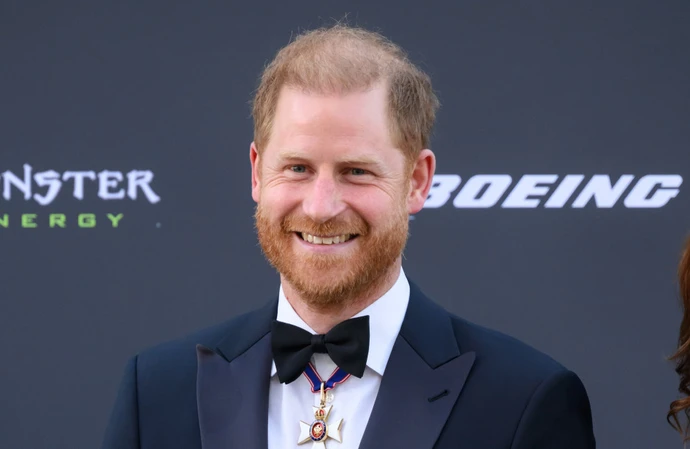
Prince Harry, Duke of Sussex, did not cry over his mother Princess Diana's death for 20 years.
The royal was just 12 when the 36-year-old Princess of Wales died after being fatally injured in a car crash in the Pont de l'Alma tunnel in Paris, France, on August 31, 1997, alongside her 42-year-old partner, film producer Dodi Fayed, and their 41-year-old driver, Henri Paul.
Harry, now 42, suppressed his emotions for two decades and admitted that therapy helped him acknowledge his grief over losing his mother, who also had William, Prince of Wales, now 44, with her ex-husband, the now-77-year-old King Charles.
In an interview with GQ, Harry was asked how grief manifested itself for him, replying: "All of it. I think what is more relatable to people is the distraction piece to it, the busyness of life.
"The fact that when it happens, everyone’s there for you, but then they quickly, not disappear, but everybody moves on, as if to say that grief is - that there’s a beginning, a middle, and an end. And from what I’ve learned from Dr. [Mary-Frances] O’Connor is that’s the opposite to how it is."
The prince is glad he can now honour Diana's memory rather than it "hold me down, pull me back or me wallowing in that grief", something that "never really occurred" to him.
Harry could not fully comprehend the grief and trauma of losing the princess until he grew older.
He explained: "I don’t know if it breaks you, especially when you’re that young. I don’t think you can really fully comprehend what’s happened.
"I think that certainly over a period of time, the resilience inside of each of us starts to grow, and it’s up to us to know ourselves.
"Back then, I didn’t know myself. The grief, the trauma, the loss, the fact that I was 12, I had no idea who I really was.
"But over the years, with life’s challenges, it has grown this resilience inside of me to realise, wow, this grief can either hold you back or it can help you grow."
The former British Army officer said life has been "better and harder" since he stopped suppressing his feelings after 20 years.
Harry added: "Therapy was the thing that really changed it for me, because it gave me permission to grieve and to acknowledge the fact that yeah, losing your mom really sucks, and you’re allowed to cry about it."
The Invictus Games co-founder, who married 45-year-old Meghan, Duchess of Sussex - also known as Meghan Markle - in May 2018, and welcomed son Prince Archie and daughter Princess Lilibet in May 2019 and June 2021, respectively, said it felt "great" to finally be able to cry after suppressing his emotions for 20 years.
Harry said: "Despite trying hard. But again, I think the harder you try to cry, the harder it becomes to actually pull that off. But yes, crying eventually feels great. It really does.
"The suppression of grief, the suppression of feelings, is a really interesting thing, but when I tried therapy, it didn’t take me that long to realize, 'Wow, I’ve been numb to this.'"
It also changed Harry as a person, adding: "So when I talk about, yes, it’s become easier and become harder, or better and harder, it’s become better because now I can be really emotionally connected to my friends, family, and specifically my children.
"But at the same time, with the state of the world, I’m now more sensitive to things that back then I was probably more numb to. So I look at it in a very interesting way.
"It’s like, 'Wow, for today or this week, I wish that I was still that guy.'"
Harry does not feel that way "too many times", and tries to find the " right balance" between blocking out negativity and letting himself to be vulnerable.
In his GQ One More Question interview, he explained: "And life is about balance, right? There are some times when you need to be able to block it out, and there are other times when you need to be vulnerable and be open to it.
"And my first therapist said something very interesting to me, this was from the UK, he said, 'Try to imagine yourself in a glass jar with the lid open, and all the negative stuff, the stuff that you don’t want to come in, just have it bouncing off the side. You get to choose what comes over the top and in.'
"Now that was, I don’t know, probably more than 10 years ago."
Harry is still learning how to manage negativity and accept that painful experiences can be "really good lessons".
He said: "Have I perfected that? No. Am I still trying? Yes, absolutely. But there’s what’s in our control, and then there’s what’s not in our control. And you’ve got to manage that and have the perspective of the things that really hurt can be really good lessons for you."