
'There were very few people like me on television...' Sir Lenny Henry is proud TV has evolved but there's more work to do for minorities
Sir Lenny Henry attended the British Diversity Awards 2026 in London on Wednesday night (26.03.26) and spoke about the need to keep working to ensure more people from minority communities get opportunities in the entertainment industry.
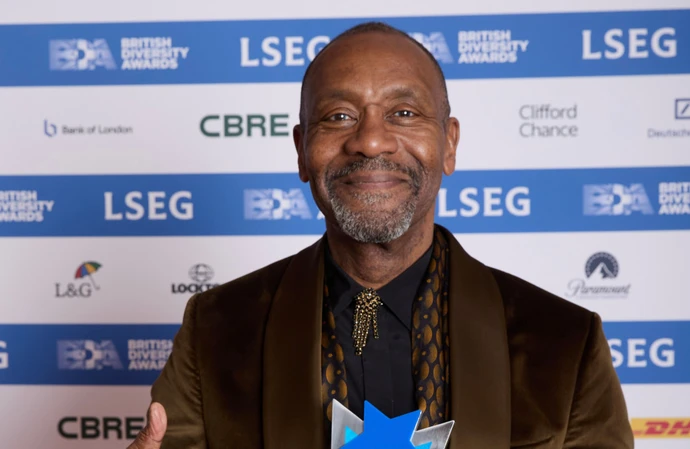
Sir Lenny Henry says there were just "five or six people" who looked like him when he started out on television in the 1970s and although minorities are now better represented on TV there's a lot more work to do.
The 67-year-old actor began his television career in 1978 presenting children's show Tiswas and then landed his own comedy sketch series The Lenny Henry Show which made him a household name in the UK in the 1980s.
When Lenny - who parents were Jamaican immigrants to the UK - began performing stand-up comedy at just 16 he can recall there were very few black faces on British TV other than Play School presenter Floella Benjamin and Love Thy Neighbour actor Rudolph Walker, among others.
Lenny is happy that in 2026 that is not the case, but he insists there is much more work to be done to ensure there are as many people from different backgrounds working in the entertainment industry.
Speaking to BANG Showbiz at the British Diversity Awards 2026 at the JW Marriott Grosvenor House hotel in London on Wednesday night (25.03.26), he said: "When I was 16, so there were very few people that looked like me on the television. There was Rudolph Walker, Derek Griffiths, Floella Benjamin and then eventually, by the late ‘70s, Trevor McDonald. So that’s five or six people, and I knew them all.
"These days we have a much bigger plethora of artists working in front of the camera, but still behind the scenes we need more gatekeepers and we need more producers and directors and writers in the mix too.
“It’s about everybody, it’s not just about a small group of people. I think we’re getting there but it’s a slow, glacial pace still. It’s almost like we’re going backwards.”
Lenny says the challenge is to always "change the gatekeepers" in the business.
The comedian can recall that the decision makers when he was working in TV in the '70s, '80s and '90s were all University of Oxford or Cambridge University graduates and that was not conducive for exciting art, and still isn't.
He said: "We have to change the gatekeepers. We change the way decisions are made about who gets to make what. We change how the room looks. It’s things like that, it does count.
"If the room is inclusive and feels equal you’re not getting the same answers to the same questions all the time, people are saying different things based on their gender or their culture or their class, they’re all offering something original and unique rather than the same old stuff those blokes from Oxbridge keep coming out with. It’s a different vibe if the room is diverse. So that’s why we’re still fighting for it, years and years and years and years later.”
Sir Lenny was honoured with the Lifetime Achievement Award at the British Diversity Awards 2026 in recognition of his long-standing impact in driving change across the media landscape.