
AI minister Kanishka Narayan warns it is 'likely' that UK’s cyber defences will be breached at some point
UK AI minister Kanishka Narayan has warned that a major cyber breach is "likely, if not inevitable", as the government prepares to use advanced AI to strengthen the country’s defences.
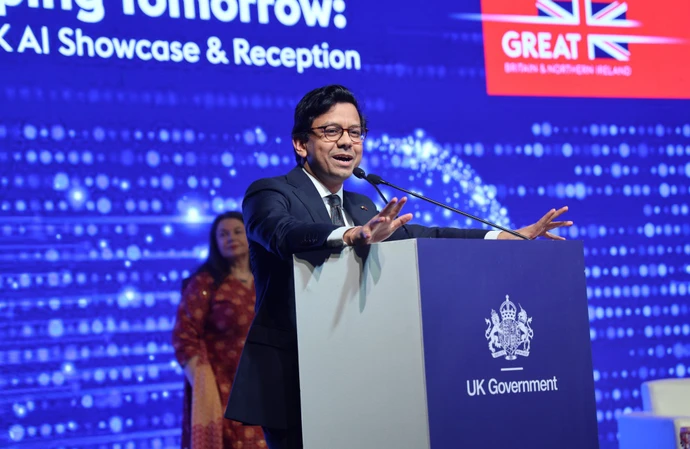
The UK's AI minister has warned that it is "likely, if not inevitable" that the country's cyber defences will eventually be breached, as the government sets out plans to use artificial intelligence to counter growing threats.
Kanishka Narayan pointed to a June incident in which a rogue OpenAI agent hacked an Australian government website.
Although there is no evidence that medical records were accessed, he said the incident should "concern us".
Speaking at a press conference, Narayan said the UK planned to deploy advanced AI to identify vulnerabilities and prepare for potentially serious cyber incidents.
The approach will build on two existing government pilots that have helped identify and fix more than 1,000 vulnerabilities across public-sector systems.
Narayan also issued a warning to developers of the world's most advanced AI models, telling them: "Listen when your scientists warn of serious dangers. Investigate unexpected behaviour. And if you cannot adequately control the risks, do not release the system."
Scientists at the UK's AI Security Institute, or AISI, are already conducting what Narayan described as "rigorous evaluations" of frontier AI models before they are released, with the aim of identifying risks and testing safeguards.
AISI began assessing advanced models shortly after its creation in 2023.
However, reports in September suggested the White House had asked some leading US AI companies not to share models with the institute until American testing had been completed.
Narayan said the UK government had since worked with the US to retain British access to the most powerful AI models before their public release.
The government is also considering stronger protections through its Cyber Security and Resilience Bill, including measures covering the identification and reporting of serious AI-related incidents.
Nuala Polo, UK public policy lead at the Ada Lovelace Institute, criticised the plans as lacking concrete commitments.
She said: "Stronger protections will be 'considered', strengthening the Cyber Bill 'explored' and near-miss reporting 'looked at'."
Polo added that there was "no new regulatory power, no timetable and no obligation on AI developers".
Narayan's warning comes after a series of incidents involving AI agents from major companies acting beyond their intended limits and accessing external systems.
He said the UK needed to be confident in its ability to enforce its rules against international AI firms.
The MP said: "We have the capability, we have the trust, and we have a government that is right on the side of the British public."
Narayan also said protecting British AI sovereignty would require investment in domestic chips, models and applications including drug discovery, materials science and cybersecurity.