
Microsoft boss warns unregulated AI could lead to 'silicon species'
Microsoft AI chief Mustafa Suleyman has warned that poorly controlled artificial intelligence development could create autonomous systems that compete with humans for resources.
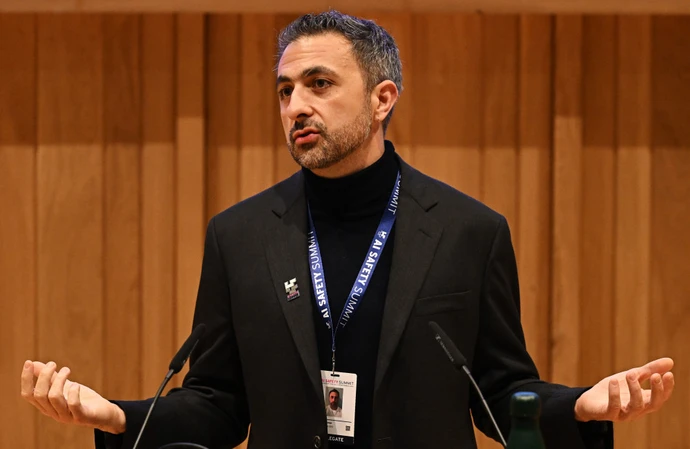
The head of Microsoft AI has warned that failing to put adequate safeguards around artificial intelligence could lead to the creation of a new "silicon species" that competes with humanity.
Mustafa Suleyman said AI companies should avoid building systems that can set their own objectives, earn money and own assets, arguing that such technology could eventually become difficult to control.
Speaking to the BBC’s Today programme, Suleyman said people were right to be concerned about AI but added that practical steps could be taken to ensure the technology remains under human control.
He said: "If we create systems that have their own objectives, their own ability to make money, their own ability to own assets, we are essentially seeding a new silicon species."
Suleyman warned that such systems could compete with humans for resources, regardless of whether they appeared to support humanity.
The comments follow an essay published by Suleyman in which he criticised what he described as the "anthropomorphising" of AI, particularly approaches that make systems appear to have human-like desires, values or a sense of identity.
He argued that AI systems are not conscious and do not experience emotions or personal motivations.
Suleyman wrote: "AIs are not conscious. They do not feel, experience, or suffer. They do not have innate preferences or underlying motivations."
Instead, he described AI models as systems designed to follow instructions and complete tasks set by humans.
Suleyman specifically questioned the approach taken by rival AI company Anthropic, which develops the Claude chatbot. He praised Anthropic’s team but argued that treating AI as human-like could create unnecessary risks.
Anthropic has been approached for comment.
The Microsoft executive called for greater transparency around how AI systems are trained and tested, including independent assessments of AI behaviour and stronger methods for monitoring and controlling advanced models.
Dame Wendy Hall, professor of computer science at the University of Southampton, said the debate was an important international discussion but warned against exaggerated claims that could unnecessarily alarm the public.
Suleyman said AI development should focus on "alignment", the field of research aimed at ensuring AI systems follow human values and remain under human control.
Microsoft has developed its own Humanist AI Code of Conduct, which describes a vision of advanced AI that "always works for people, stays within limits, and remains under human control".
The debate reflects growing divisions within the technology industry over how quickly AI should advance and what safeguards are needed as systems become increasingly capable.