
Scientists testing underwater solar panels
Scientists in China have developed underwater solar panels that can generate electricity at depths of up to 10 metres, potentially helping power long-term marine research equipment.
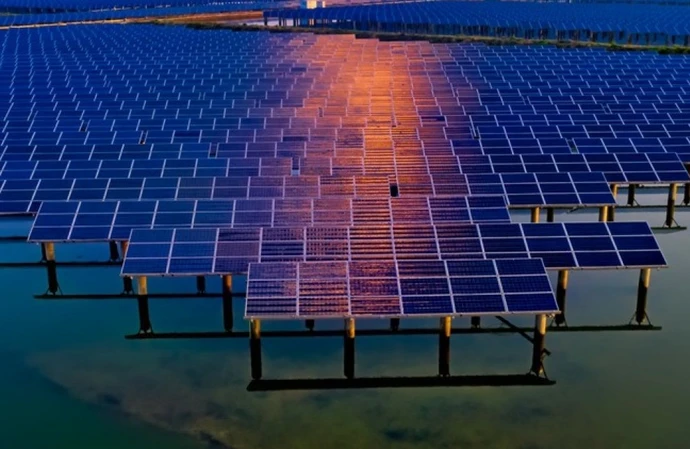
Scientists are exploring a new way to keep underwater technology running for longer, after researchers demonstrated that solar panels can generate usable power beneath the waves.
A team from Yunnan University in China has developed solar cells capable of collecting energy at depths of up to 10 metres, potentially opening the door to more reliable power sources for underwater sensors, cameras and communication equipment.
The research, published in the scientific journal Joule, found that solar cells deployed in the South China Sea were able to generate enough electricity to charge lithium-ion batteries within two hours.
The underwater panels were made using lead halide perovskite, a material that has gained attention in solar research because of its ability to efficiently convert light into electricity.
Scientists added a polymer called polyhexamethylene guanidine hydrochloride, which improved the cells’ performance.
Wen-Hua Zhang from Yunnan University said previous research into underwater solar power had largely focused on very shallow depths of less than two metres.
“This work presents the first functional validation of submerged solar cells practically operating at a water depth of up to about 10 meters, greatly broadening their application scope,” Zhang said.
During testing, the solar cells produced 1,416 milliwatt-hours of electricity at a depth of two metres.
Output decreased as the panels were moved deeper, generating 752 milliwatt-hours at six metres and 324 milliwatt-hours at 10 metres.
Laboratory tests also showed the cells achieved a power conversion efficiency of almost 35 percent, demonstrating their potential for future marine applications.
Researchers believe the technology could help power underwater equipment that currently relies on batteries or requires regular maintenance trips. Devices such as environmental monitoring sensors, cameras and communication systems could potentially operate for longer periods without human intervention.
The researchers estimate each cell could remain operational for around five and a half years.
However, challenges remain before underwater solar farms become widespread.
One major concern is biofouling, where marine organisms, algae and other biological material attach themselves to surfaces.
This build-up could block sunlight and reduce the efficiency of the panels, meaning regular cleaning or protective coatings may be required.
The impact of deploying large numbers of solar cells in marine environments will also need further investigation to understand any effects on surrounding ecosystems.
Despite these challenges, the scientists believe their work could lead to more self-sufficient underwater technology.
The team said the research “paves the way for the practical deployment of perovskite photovoltaics in underwater environments”, creating new possibilities for autonomous marine energy systems and long-term ocean exploration.