
Rollout of robotaxis in London unlikely to happen this year
London’s planned robotaxi rollout is facing delays as regulatory guidance and safety approvals remain unfinished, making fully driverless rides unlikely to launch before the end of 2026.
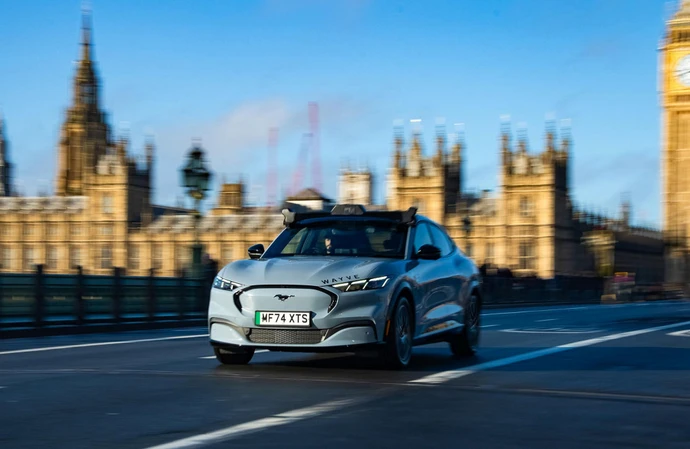
The rollout of fully driverless robotaxis in London is unlikely to happen this year as regulatory and technical hurdles delay the UK government's ambitious timetable.
Uber and London-based Wayve were recently granted the capital's first private hire vehicle licences for self-driving taxi services.
They planned to begin passenger trips with a human safety driver "later this summer", before eventually removing the driver.
The government had hoped to accelerate the introduction of fully autonomous taxi services.
Transport Secretary Heidi Alexander announced in 2025 that commercial trials would begin in spring 2026, bringing the timetable forward by a year.
However, progress has slowed.
Transport for London (TfL) has yet to publish the guidance companies must follow to gain approval for driverless services.
Christina Calderato, TfL's director of strategy, told the London Assembly's transport committee last month that the authority would not be ready to accept applications "for some time".
She said: "I do not think we are in a rush to get [the guidelines] out. There is a huge amount of work going on behind the scenes."
More than 100,000 Londoners are reportedly on waiting lists for self-driving taxis from Uber and Wayve.
The companies are competing with Google-owned Waymo and China's Baidu, whose Apollo Go service is already operating in several cities worldwide.
Waymo's head of UK and European policy, Ben Loewenstein, said the company was "working through the safety approval process" with the Department for Transport and waiting for TfL's guidance.
Waymo is aiming to launch a fully autonomous service in London by the end of this year, although Loewenstein would not confirm whether paid rides for the general public would be available by then.
TfL has already licensed 15 Ford Mustang Mach-E vehicles fitted with Wayve's AI driving system, cameras and radar.
The vehicles are being used with a TfL-licensed private hire driver in the driver's seat who can intervene if required, while the autonomous system controls the car.
Robotaxis are already available in more than 20 cities across the US, China and the Middle East.
Croatia's capital Zagreb became the first European city to offer autonomous rides to the public earlier this month, although its Uber service still has a human driver for onboard monitoring.
Waymo has also announced plans to begin commercial operations in Munich in late 2027.
For London, however, the remaining regulatory approvals mean the government's original 2026 ambitions are increasingly difficult to meet.