
How did Bono help Penelope Cruz get over her fear of driving?
Penelope Cruz is finally “thinking about” getting her driver's licence at the age of 52, thanks to a gift from U2's Bono.
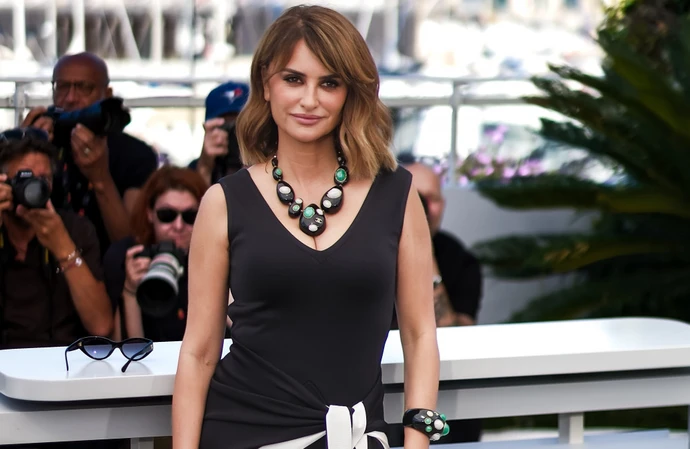
Penelope Cruz is finally “thinking about” getting her driver's licence at the age of 52.
The Invite actress has a “very deep fear of driving” since her sister was hit by a car when she was a child but when U2’s Bono bought her a car for her birthday in April, she started considering learning to drive.
Speaking on Hot Ones, Penelope explained: “My friend Bono gave me a car for my last birthday.
“He gave me a car and I think that is like the ultimate push to do it. After you get a car from Bono, you don't get your license? How crazy is that? So now I'm thinking about it again, but it's such a deep fear.”
Penelope revealed that her fear of driving is so great, following her sister Monica’s accident, that she hates even getting in to cars.
She said: “Every time I get in a car, I feel like, ‘OK, here we go. Are we going to make it or not?’ My feeling is, Am I going to make it today?'
“I think there is a name for that. They came up with a name recently because there are a lot of people like me.”
According to the Cleveland Clinic, an intense, persistent fear of driving or riding in a vehicle is clinically called amaxophobia, while vehophobia refers to the intense fear of driving, specifically the act of operating a vehicle.
Cruz opened up about the traumatic incident in 2024, telling Elle: “I have a fear of driving. My sister was run over by a car in front of me when I was eight or nine. I remember she was wearing a red coat. And for me, time stopped. It’s a great trauma, because I saw her losing consciousness. And I was numb in the hospital, telling people, ‘Oh, my sister just got run over by a car.’”
And, Cruz admitted she is hypersensitive to other people’s suffering.
She said: “I’m lucky to have it, but maybe it makes me feel or suffer things more. I can feel it; it’s like a hypersensitivity in every way - visually, to sound, to people’s feelings. It’s been one of the main things I deal with in therapy: how to work a balance so I can keep feeling those things without making those feelings my own.”